Monday & Wednesday
8:00 am - 5:00 pm
Tuesday & Thursday
7:30 am - 4:00 pm
704-549-8878
Call Us Today!
SERVICIOS EN ESPAÑOL
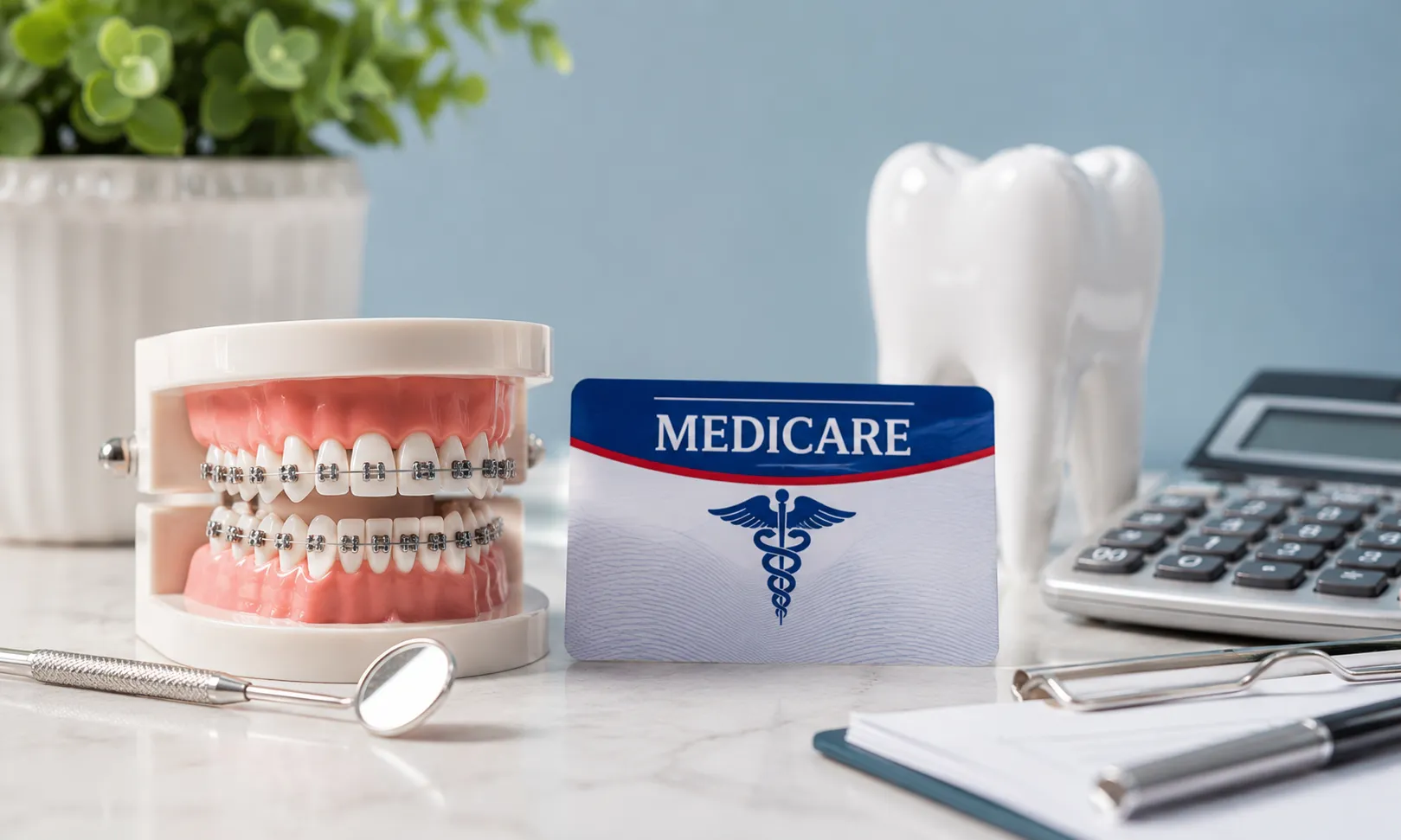
Medicare usually does not cover routine braces unless orthodontic treatment supports medically necessary healthcare procedures. Orthodontic coverage often depends on functional bite problems, jaw development concerns, and treatment documentation rather than cosmetic goals. At Smart Orthodontics, patients exploring treatment options often review Braces because appliance selection may influence comfort, appearance goals, and long-term planning. The practice provides personalized care for children and adults with individualized orthodontic approaches.
What it is:
Insurance-related orthodontic coverage that may help reduce treatment costs when braces are considered medically necessary.
Who it is for:
Children or adults with severe bite problems, jaw development concerns, airway-related issues, or structural orthodontic conditions.
Main benefits:
Limitations:
Timeline / durability:
Insurance approval commonly requires examinations, imaging, and preauthorization before treatment begins.
Medicare commonly excludes routine orthodontic treatment.
Original Medicare generally does not cover:
Partial exceptions may occasionally apply when treatment supports:
Examples include:
Severe skeletal imbalance → surgical treatment planning → orthodontic coordination
Facial trauma → reconstructive care → medically supported treatment
If orthodontic treatment directly supports a larger healthcare procedure, then limited coverage may occasionally apply.
The official Medicare dental coverage guidance explains that routine dental treatment is generally excluded unless linked to medically necessary healthcare services.
Medicaid may cover braces for children when treatment meets medical necessity standards.
Medicaid programs frequently prioritize conditions affecting:
Coverage standards vary by state because orthodontic guidelines are administered individually.
Families evaluating early developmental concerns sometimes explore Kids Orthodontics because growth patterns and developmental stages may affect orthodontic timing decisions.
Insurance providers commonly separate cosmetic treatment from functional treatment needs.
Insurance reviews often categorize orthodontic care into:
Cause → effect → solution commonly follows:
Appearance concerns → lower medical necessity → limited coverage → clinical review
Examples include:
Minor spacing → cosmetic classification → lower approval likelihood
Severe bite imbalance → structural concern → stronger evaluation consideration
If treatment primarily addresses appearance concerns, then insurance approval may become less likely.
Orthodontic treatment may qualify more often when structural problems affect function.
Conditions may include:
Insurance reviewers commonly assess:
Examples include:
Impacted teeth → eruption disruption → treatment review
Severe crowding → functional limitations → orthodontic evaluation
Patients with developmental concerns sometimes review Damon Braces because appliance design and bite findings may influence treatment selection.
The federal Medicaid EPSDT program requires medically necessary treatment access for eligible children, although orthodontic standards vary between states.
Orthodontists commonly use clinical documentation and imaging to support insurance requests.
Documentation may include:
Examples include:
Crossbite findings → imaging review → insurance documentation
Jaw asymmetry → growth assessment → treatment support
Cause → effect → solution commonly follows:
Diagnostic findings → documentation support → authorization review
If documentation demonstrates functional limitations, then approval potential may improve.
Medicare and Medicaid differ significantly in eligibility requirements.
| Feature | Medicare | Medicaid |
| Primary population | Adults 65+ or disabled patients | Low-income children and adults |
| Routine braces coverage | Rare | More common for children |
| Cosmetic orthodontics | Usually excluded | Usually excluded |
| Medical necessity requirement | Very strict | State-dependent |
| Pediatric orthodontics | Rare | Frequently prioritized |
| Adult orthodontics | Limited | Often restricted |
Medicaid commonly provides broader pediatric access because developmental care receives stronger support requirements.
Alternative payment pathways may help patients access orthodontic care.
Options may include:
Examples include:
Insurance denial → phased treatment → functional care prioritization
Limited benefits → financing discussion → broader access planning
Patients comparing treatment approaches sometimes review Clear Aligners because appliance selection and orthodontic complexity may influence total care cost.
Adult orthodontic coverage is usually more limited than pediatric coverage.
Adult qualification may occasionally involve:
Examples include:
Jaw imbalance → surgical planning → coordinated orthodontic care
Trauma history → bite disruption → treatment evaluation
Because adult coverage varies significantly, insurance verification is typically recommended before orthodontic evaluation begins.
Does Medicare pay for braces?
Medicare generally excludes routine braces and may only provide limited exceptions when treatment supports medically necessary care.
Does Medicaid cover braces for adults?
Adult Medicaid orthodontic coverage is often more limited and depends on state guidelines.
Does Medicaid cover braces for children?
Many Medicaid programs may cover braces when severe developmental or bite concerns are documented.
Can preauthorization affect insurance approval?
Preauthorization may require imaging, measurements, and supporting documentation before orthodontic benefits are reviewed.
Can clear aligners qualify for insurance coverage?
Clear aligners may occasionally qualify when treatment addresses structural concerns rather than cosmetic alignment alone.
Why are braces denied by insurance?
Insurance denials commonly occur when treatment is classified as cosmetic rather than medically necessary.
Orthodontic coverage decisions commonly depend on treatment purpose, insurance policies, and clinical evaluation findings. Coverage limitations may vary because providers often distinguish functional treatment needs from cosmetic treatment goals.
If you are noticing severe crowding, chewing difficulty, jaw imbalance, or developmental bite concerns, an orthodontic evaluation may help determine whether your condition aligns with available insurance criteria. If this applies to your situation, recommendations typically depend on growth stage, diagnostic findings, and treatment complexity.
Smart Orthodontics can evaluate your orthodontic concerns and explain insurance-related considerations based on your individual findings. Request a consultation to review your orthodontic needs and better understand treatment recommendations and potential insurance coverage options.
Check out Smart Orthodontics Office hours to plan your visit.